


PubMed
pubmed.ncbi.nlm.nih.gov › 28988386
Perspectives on medicinal properties of natural phenolic monoterpenoids and their hybrids - PubMed
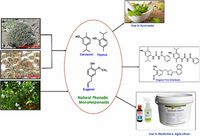
Carvacrol, thymol and eugenol belong to a class of naturally presenting phenols with a ten-carbon unit, which are present in essential oils of many plants. These versatile molecules are incorporated as useful ingredients in many food products ...
chemical compound
Factsheet
Identifiers
CAS Number 499-75-2
3D model (JSmol) Interactive image
Identifiers
CAS Number 499-75-2
3D model (JSmol) Interactive image
Wikipedia
en.wikipedia.org › wiki › Carvacrol
Carvacrol - Wikipedia
March 23, 2026 - Carvacrol, or cymophenol, C6H3(CH3)(OH)C3H7, is a monoterpenoid phenol.
ScienceDirect
sciencedirect.com › science › article › pii › S145239812319835X
Electrochemical sensing of monoterpene phenols in plant essential oils using a molecularly imprinted polymer dual-template sensor - ScienceDirect
October 14, 2023 - Monoterpene phenols are naturally occurring aromatic compounds found in plant essential oils, contributing to their distinct flavors, fragrances, and medicinal properties. Thymol and carvacrol, major constituents of thyme and oregano essential ...

PubMed
pubmed.ncbi.nlm.nih.gov › 39105539
Thymol-a plant-based monoterpenoid phenol compound of an essential oil for the management of sheath blight disease of rice - PubMed
Sheath blight of rice is a global disease that significantly reduces rice yield. This study reports the antifungal activity of an active compound of essential oil, thymol, at different concentrations against Rhizoctonia solani (strain RS-Gvt). In vitro assay results indicated that thymol concentrati …
Wiley Online Library
scijournals.onlinelibrary.wiley.com › doi › abs › 10.1002 › ps.8362
Thymol—a plant‐based monoterpenoid phenol compound of an essential oil for the management of sheath blight disease of rice - Usha - 2024 - Pest Management Science - Wiley Online Library
August 6, 2024 - Usha, I., Pramesh, D., Shrikanth, B., Raghunandana, A., Harish, M.N., Prasannakumar, M.K., Sharanabasav, H. and Manjunatha, C. (2024), Thymol—a plant-based monoterpenoid phenol compound of an essential oil for the management of sheath blight disease of rice.
ScienceDirect
sciencedirect.com › topics › pharmacology-toxicology-and-pharmaceutical-science › thymol
Thymol - an overview | ScienceDirect Topics
Thymol, an inherent volatile mono-terpenoid phenol, is the principal active constituent within oils derived from botanical sources such as Thymus vulgaris L., Origanum L., and Carum copticum L. Both thymol and piperine manifest multifaceted attributes encompassing a wide spectrum of pharmacological ...
Springer
link.springer.com › home › molecular diversity › article
Perspectives on medicinal properties of natural phenolic monoterpenoids and their hybrids | Molecular Diversity | Springer Nature Link
October 7, 2017 - Abstract Carvacrol, thymol and eugenol belong to a class of naturally presenting phenols with a ten-carbon unit, which are present in essential oils of many plants. These versatile molecules are incorporated as useful ingredients in many food ...
Wikipedia
en.wikipedia.org › wiki › Thymol
Thymol - Wikipedia
3 weeks ago - Thymol (also known as 2-isopropyl-5-methylphenol, IPMP), C10H14O, is a monoterpenoid, phenol derivative of p-cymene, isomeric with carvacrol.
ResearchGate
researchgate.net › publication › 320269257_Perspectives_on_medicinal_properties_of_natural_phenolic_monoterpenoids_and_their_hybrids
(PDF) Perspectives on medicinal properties of natural phenolic monoterpenoids and their hybrids
February 1, 2018 - Monoterpenoids are the natural products having pest management potency against different agricultural as well as public health pests. Ether and ester derivatives of carvacrol, [2-methyl-5- (1-methyl ethyl) phenol], a natural phenolic monoterpenoid, ...
ScienceDirect
sciencedirect.com › topics › chemistry › monoterpenoid
Monoterpenoid - an overview | ScienceDirect Topics
Geraniol, a monoterpenoid alcohol present in the essential oil of the same plant species, is proposed to be the precursor in the biosynthetic pathway of secoiridoid glycosides [43,44,45,46]. Monoterpene phenols thymol, methyl thymol, and carvacrol are also present in C.
ResearchGate
researchgate.net › publication › 340209246_Thymol_a_monoterpenoid_phenol_moderately_ameliorates_high-dose_L-arginine-induced_rat_gastric_damage
(PDF) Thymol, a monoterpenoid phenol, moderately ameliorates high-dose L-arginine-induced rat gastric damage
September 10, 2019 - Thymol and carvacrol are two frequently abundant volatile monoterpene phenols found as constituents of different, widely used medicinal plants mainly belonging to the Lamiaceae family.
PubMed
pubmed.ncbi.nlm.nih.gov › 23255497
The phenolic monoterpenoid carvacrol inhibits the binding of nicotine to the housefly nicotinic acetylcholine receptor - PubMed
Background: The phenolic monoterpenoid carvacrol, which is found in many plant essential oils (thyme, oregano and Alaska yellow cedar), is highly active against pest arthropods, but its mechanisms of action are not fully understood.
Arabjchem
arabjchem.org › thymol-bioactivity-a-review-focusing-on-practical-applications
Thymol bioactivity: A review focusing on practical applications - Arabian Journal of Chemistry
November 30, 2020 - Thymol, also known by the chemical names 2-isopropyl-5-methylphenol and 5-methyl-2-isopropylphenol, is a natural monoterpenoid phenol, crystalline and colorless, with a characteristic odor. It is also an isomer with carvacrol and is the principal active ingredient of oil extracted from the ...
Wikipedia
en.wikipedia.org › wiki › Monoterpene
Monoterpene - Wikipedia
July 20, 2026 - Geranyl pyrophosphate is the precursor to monoterpenes (and hence monoterpenoids). Elimination of the pyrophosphate group from geranyl pyrophosphate leads to the formation of acyclic monoterpenes such as ocimene and the myrcenes. Hydrolysis of the phosphate groups leads to the prototypical ...
ScienceDirect
sciencedirect.com › topics › medicine-and-dentistry › carvacrol
Carvacrol - an overview | ScienceDirect Topics
Carvacrol, a monoterpenoid phenol, is being used in traditional medicine for numerous purposes such as antioxidant, anti-inflammatory, and treatment of pulmonary inflammatory diseases (Sajed et al., 2013).
Studocu
studocu.com › laguna state polytechnic university › electronics and communication engineering › acceptability of plant-based insect repellent: a study in san antonio 1, spcl
Acceptability of Plant-Based Insect Repellent: A Study in San Antonio 1, SPCL - Studocu
June 12, 2025 - A natural compound found in oregano, thyme, and other plants. It is known for its antimicrobial, antifungal, and insect-repelling properties. Carvacrol is commonly used in natural insect repellents and essential oils.
Ijcsi
ijcsi.pro › home › papers › self-assembled monoterpenoid phenol as vapor phase atmospheric corrosion inhibitor of carbon steel
Self-assembled monoterpenoid phenol as vapor phase atmospheric corrosion inhibitor of carbon steel - International Journal of Corrosion and Scale InhibitionInternational Journal of Corrosion and Scale Inhibition
May 18, 2018 - The inhibition efficiency of сarvacrol as a non toxic volatile corrosion inhibitor for the temporary protection of mild steel was investigated. Weight loss measurements were used to measure the corrosion rate in the absence and presence of these volatile inhibitor compounds.
ScienceDirect
sciencedirect.com › topics › chemistry › monoterpene
Monoterpene - an overview | ScienceDirect Topics
Monoterpenes and monoterpenoids ... a molecular formula C10H16, whereas monoterpenoids are modified terpenes containing different functional groups such as alcohols, carboxylic acids, ketones, aldehydes, and phenols....
Semantic Scholar
pdfs.semanticscholar.org › cc5f › 1ab9784f84d52375a224d50b049dcb157b55.pdf pdf
Self-assembled monoterpenoid phenol as vapor phase ...
We cannot provide a description for this page right now
ScienceDirect
sciencedirect.com › science › article › pii › S1878535220304561
Thymol bioactivity: A review focusing on practical applications - ScienceDirect
November 10, 2020 - Thymol is a natural volatile monoterpenoid phenol that is the main active ingredient of oil extracted from species Thymus vulgaris L., commonly known as thyme, and other plants such as Ocimum gratissimum L., Origanum L., Carum copticum L., different ...
